 As an established leader, developing executive teams or organizations, and often when working in collaboration with other partners, consensus is required to achieve set goals. Consensus is usually seen as a positive thing – the lubricant that makes team actions successful. However, lurking within, is a significant danger … and that is consensus inertia … sometimes known as ‘groupthink’!
First described by Jerry B Harvey in his article ‘The Abilene Paradox’, consensus inertia strikes at the heart of great leadership because it erodes values; stifles critical thinking, limits creativity; enables undue influence of direction; and, allows inequity of action. It is most commonly experienced due to a breakdown in group communication in which each member of the group mistakenly believes that their own preferences are counter to the group’s and, therefore, do not raise objections, even when discussions are moving in a direction that they believe to be totally unsound.
Avoid consensus inertia by ensuring values and team behavior are fully aligned!” ~John Thurlbeck Tweet this!
One of the greatest challenges to any leader is to ensure that all members of their team apply critical and independent thinking to the challenges they face together and to feel the freedom to express those views without fear of condemnation or reprisal. Leaders must also avoid the perils and limitations of ‘groupthink’ that can be a major contributory factor to poor business decisions. Effective leaders do this by following four simple rules:
1. They communicate vision and values in a compelling and inclusive way.
Values should fit with the team’s communication, both internally and externally. So, if you say that you are team-oriented where everyone counts, then a traditional ‘command and control’ style will challenge this. Reflecting on and ‘living’ the values of the team provides permission to team members to take responsibility for their own thoughts and actions and not feel constrained to conform. It sets the boundaries and parameters for individual and team action and autonomy.
2. They revisit and refresh purpose … and the values underpinning that purpose.
Regularly taking your team back to its purpose and reflecting on the values that underpins that purpose is the best way to ensure that consensus is real rather than imagined or assumed. Why a focus on values? Because organizational values define the acceptable standards which govern the behavior of individuals within an organization and this helps to limit contradictory behavior.
3. They confront contradictory behavior.
Effective leaders ensure that they and other team members give feedback to those who don’t live out the vision of the team. They know that if people are allowed to live out contradictory values then, over time, there is a clear danger that those values will usurp the desired values. This can be particularly the case if it is the more dynamic, dominant individuals within the team who are espousing contradictory values.
4. They periodically checkout with feedback from partners.
Great leaders demonstrate courage, openness and are not risk averse! They will periodically ask those involved with their team what they think of its values? They will do this with those involved internally within an organization and with its external partners – including clients, suppliers and other stakeholders. They will then act on that feedback.
Developing effective consensus in driving business decisions and in realizing ambitions and goals is critical for success and a harmonious working climate. However, within the everyday noise and complexity of organizational life, it is so easy to lose sight of! Avoid this by articulating your vision and values in a compelling and inclusive way; modelling your vision and values; inviting others to participate in your vision and values; and seeking feedback as to what others think of them!
Do you have a statement of values for your team? Is it a living expression of current, real values … or just an expression of past desires? When was the last time you reviewed the four simple rules to see how well you and your team are living the values? What other tips do you have? Please share your thoughts and comments below.

 After the last post, I hope you have a bunch of things written down that you want to accomplish in your life and in more specifically in the next year. We are going to come back to that list shortly. I firmly believe that success in certain areas of one’s life can equal extreme failure in other areas of one’s life, if one is not careful. For example, how successful would I really be if I wrote 4 books next year; but at the same time, alienated my family and friends because I never spent time with them? I also believe that the synergy of success from one area, can fuel passion and greater achievement in another area. So take that same example, if I met the needs and wishes of my spouse and family, and thus ended up improving my relationships, that joy and success would carry over and make me more passionate and motivated to duplicate that success in another area of my life, like writing books. Plus I would probably have more support from my wife and family for doing so.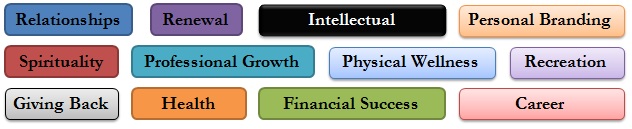
 “A leader is best when neither seen nor heard; Not so good when adored or glorified; Worst when hated and despised. Fail to honor people, they will fail to honor you; But of a good leader, when his (or her) work is done; The aim fulfilled; The people will all say: “We did this ourselves.” (Lao Tse).